
What a bot actually does
It watches, it applies your sentence, it can send or cancel. Charges, holidays, and a dead API still happen — we put those in the report.

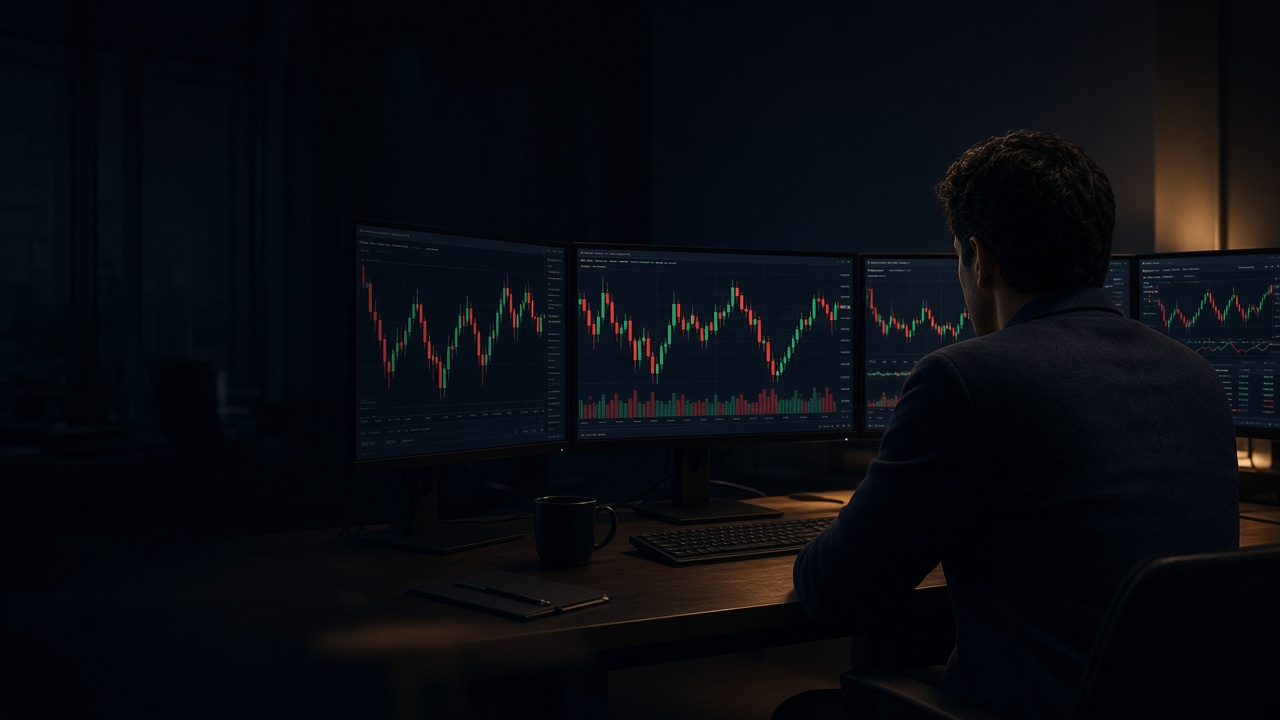
Trading tools, explained plainly
Vega Trades builds bots and indicators for people who want rules they can explain. This is education and tooling — not a promise that you will make money.
A trading bot is software that watches prices, applies your rules, and can place or cancel orders. The intelligence is in the rules you write — signal, risk, execution, and an off switch a person still owns.
An indicator is a lens on the chart (trend, momentum, volatility, volume). It does not know the future. Stacking three oscillators from the same family usually just repeats the same noise.
If you want a custom bot or indicator, tell us the market, the timeframe, and the rule in one sentence. We will say if it is buildable — and we will not dress a weak rule up as a guaranteed edge.
In practice this splits into five jobs: a bot that executes your rule, an indicator that marks the chart, a backtest that tries the rule on old days, a risk control that caps the damage, and a note that is just a paragraph, not software. Most people should start with the backtest before they start with the bot.
It watches, it applies your sentence, it can send or cancel. Charges, holidays, and a dead API still happen — we put those in the report.
Pair one trend tool, one momentum tool, and one volatility or volume tool. If you cannot explain why it fires, it does not belong in the bot.
Email the market, the timeframe, and the rule in one sentence. We will say if it is buildable — without dressing a weak rule up as an edge.
You already have a rule — ‘if this candle does this, I stay out.’ We turn that into software that watches the chart while you are at work. You still decide when it is allowed to send an order.
Most charts are crowded. We add one mark with a job: is this stretch too far, is volume real, is the trend still on. It will not tell you tomorrow’s close.
Before a rupee is live, we walk the rule through old days and a dummy book. Brokerage, holidays, and gaps go in the report. A green curve with none of that is not useful.
The bot can be clever. The account still needs a ceiling. We cap size and the day’s loss, and we give you a button that flattens everything — including when you are in a meeting.
Sometimes the useful thing is a paragraph, not software. We write what we are watching and why a rule is in or out. It is a note. It is not a tip group.